TRANSFORM FURNITURE WITH DECORATIVE PLASTERSPlastering Furniture Course
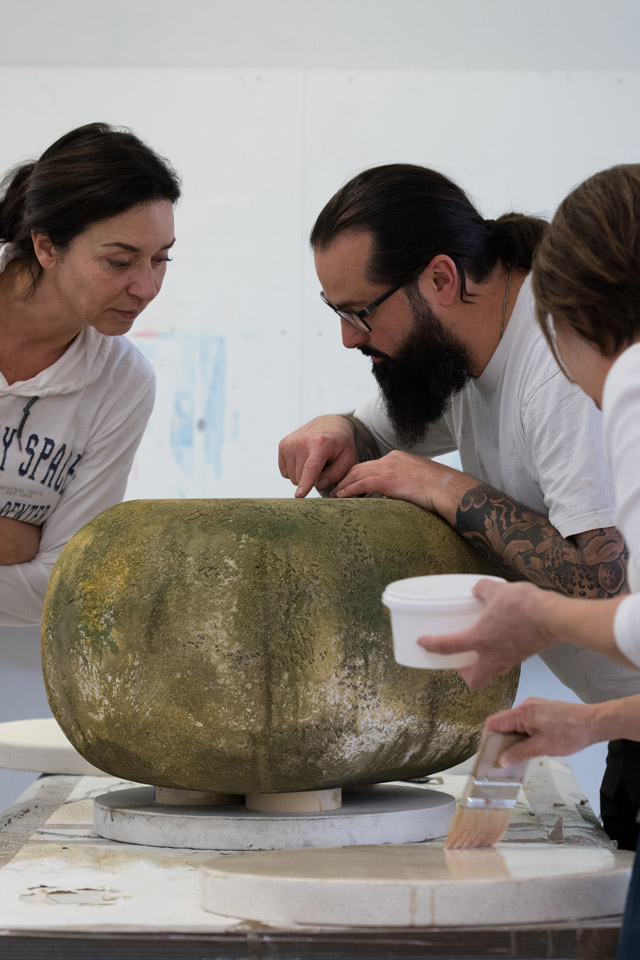
Plastered furniture is increasingly popular in high-end, luxurious settings, where architects and designers seek such pieces to elevate the tactile and aesthetic quality of a space. These plastered items mimic the appearance of heavier materials like stone or concrete on lightweight, functional wooden furniture such as tables, drawers, and desks.
However, applying decorative lime-based plasters to furniture presents significant challenges. Wood’s natural tendency to expand and shrink with changes in weather can cause the plaster to crack. Additionally, the water of the plaster may warp the wooden surface, and its fragility around sharp corners can lead to damage.
To address these complexities, our course is led by a master craftsman who has dedicated the past ten years to developing the most effective methods for plaster application on furniture, ensuring durability even on furniture pieces for exteriors. Participants will learn how to avoid common pitfalls that can turn a potential masterpiece into an unsellable item.
This exclusive workshop provides comprehensive, in-depth training on applying lime and cement-based decorative plasters to furniture. It covers all aspects of the process, from preparing the substrate to applying the plaster and adding the final protective treatments. The course focuses on working with both standard and organic-shaped wooden pieces, accommodating various surface types, shapes, and sizes. Upon completion, the finished furniture pieces can be shipped to participants, allowing them to retain a physical testament to their newly acquired skills.


TRANSFORM FURNITURE WITH DECORATIVE PLASTERSPlastering Furniture Course
Plastered furniture is increasingly popular in high-end, luxurious settings, where architects and designers seek such pieces to elevate the tactile and aesthetic quality of a space. These plastered items mimic the appearance of heavier materials like stone or concrete on lightweight, functional wooden furniture such as tables, drawers, and desks.
However, applying decorative lime-based plasters to furniture presents challenges. Wood’s natural tendency to expand and shrink with changes in weather can cause the plaster to crack. Additionally, the water of the plaster may warp the wooden surface, and its fragility around sharp corners can lead to damage.
To address these complexities, our course is led by a master craftsman who has dedicated the past ten years to developing the most effective methods for plaster application on furniture, ensuring durability even on furniture pieces for exteriors. Participants will learn how to avoid common pitfalls that can turn a potential masterpiece into an unsellable item.
This exclusive workshop provides comprehensive, in-depth training on applying lime and cement-based decorative plasters to furniture. It covers all aspects of the process, from preparing the substrate to applying the plaster and adding the final protective treatments. The course focuses on working with both standard and organic-shaped wooden pieces, accommodating various surface types, shapes, and sizes. Upon completion, the finished furniture pieces can be shipped to participants, allowing them to retain a physical testament to their newly acquired skills.
TECHNIQUES
Petrae, Pastellone and other mineral plasters on wooden furniture.
INFORMATION
Instructor: Master craftsman Michael de Kimpe (Instagram page)
Participants: max 10, min 4
Requirements: experience with application of decorative lime-based plasters is required
DATES
Next class: Run on request. Please contact us to arrange dates.
Duration: 4 days
Location: Italy or Belgium
PRICE
Total price (inclusive of deposit): € 1150 + VAT 22%
Deposit: € 427 (€ 350 + VAT 22%)
Couples and groups will benefit from a € 50 discount per person.
Discounts are available for attending multiple classes in the same year.
The cost of this training includes:
- Teaching
- Access to the necessary laboratory equipment
- Daily lunch
- Daily transport from the meeting points in Vicenza to our premises and back
- A set of prime-quality tools that you can take home with you upon completion
Check course availability
Our courses are small, in-person, and run on fixed dates.
This form helps us check availability and guide you towards the most suitable course.



ABOUT
The Istructor
Michael De Kimpe is the driving force behind MDK Interiors in Belgium. With 25 years of experience, a professional background at Descamps Interiors and projects across Europe and the United States, he has developed a distinctive approach to decorative finishes, combining craftsmanship, curiosity and a keen understanding of materials.
Despite his extensive experience, Michael considers himself a lifelong learner. He regularly attends workshops, explores new techniques and exchanges knowledge with professionals of all generations. For him, creativity means questioning established methods, experimenting with materials and discovering unexpected possibilities.
Inspired by natural stone, rock formations and weathered patinas, he challenges the conventional applications of decorative plasters, exploring how texture, colour and form can create unique finishes. His affinity with Stucco Italiano stems from a shared appreciation of mineral materials, natural ingredients and traditional craftsmanship.
In the Furniture Coating course, Michael shares his experience and techniques while encouraging participants to experiment and develop their own signature style. Even as an instructor, he believes every exchange offers an opportunity to learn.
FAQ
- Full refund for cancellations due to force majeure or if class is canceled by Stucco Italiano
- Deposit held for a future class for other cancellations.
- Teaching & access to the necessary laboratory equipment
- Daily lunch at local restaurants / at premises
- Daily transport from Vicenza’s & Thiene’s meeting points to our site and back
- Stucco Italiano tool kit, yours to keep
- One group dinner
- A certification, recognised wherever you work, giving you access to the same alumni benefits.These include eligibility to become a preferred applicator in your region, discounts on future training courses in both Italy and the USA, and, when available, exclusive promotions on selected products.
Group Discount: Each participant who is part of a group (2 or more persons) will receive a 50 euro discount.
Multiple Classes Discount: Participants attending more than one class in the same year will receive the following discounts:
- 10% off the second class
- 15% off the third class
- 20% off any subsequent classes
Please note: The group discount and the multiple classes discount cannot be combined.
- English
Just some working clothes or something you don’t mind staining.
The remaining course fee will be due on the first day of the course at Stucco Italiano’s premises. We offer the following payment options:
9.00 AM – 5.00 PM daily.
- From Venice airport, take a shuttle to Venezia Mestre Station (get your tickets at the airport) and then a train to Vicenza (train tickets: Trenitalia)
- Alternatively, with our assistance, you can book a taxi from Venice airport to Vicenza
- For extra freedom of movement, you can rent a car at the airport.
- From Vicenza: provided daily bus shuttle from Viale Roma, in front of Hotel Campo Marzio with departure at 8.20 AM, to our site and back
- From Thiene: provided daily transport from the city centre (at 8.30 AM) to our site and back
We will either have lunch at a nearby restaurant or a simple catering at Stucco Italiano.

